I’ve been in the HUD-VASH program for a couple years. Recently, a student asked me to answer a survey about that system. I am sharing my answers hoping folk who object to the tax spending will better understand the need. We are not lazy. We are broken.
Client Needs 1. What are the most common needs veterans have when they enter the HUD-VASH program?
I entered the HUD-VASH program through the transitional housing / homeless program. Everyone in my shelter was homeless for a reason. Two of us were missing limbs and had other physical concerns. Most had alcohol and substance abuse challenges. So I’d have to go with the ‘most common’ need is intervention in those areas.
Client Needs 2.
How does the program assess veterans’ needs when they first begin receiving services?
I survived a moderate traumatic brain injury. When I transitioned into an apartment, the program provided my case worker Lisa. She helps me figure things out and find resources. Example: The apartment complex inspected and decided my floor was too dirty. I have no legs and my left arm doesn’t work right. My wheelchair drags in mud and I can not mop. I tried crawling to clean the floor, but that made the arm worse. My case worker Lisa knew I qualified for an aid.
I am without legs due to exploitation and abuse. I’ve been trying to divorce my abuser. Lisa helped me to qualify for legal aid. After the divorce, maybe I’ll be able to end the garnishment I am paying for the wife’s fraud.
I think Lisa’s job is to keep me in the apartment now that I have it.
Client Needs 3.
Are there any needs veterans frequently have that the program has difficulty addressing?
My transition from the shelter to my apartment was wildly frustrating threw the established program. We were expected to find apartments on our own, keep a log book, show we were trying. But I was never told the price range nor did I have a way to visit possible apartments. It was pointless. Fortunately for me, the house mom in my transitional facility I was in identified my challenge. Still, I did not find out my rent, deposit or any financial details until the day I signed my lease. I thinking the search for appropriate housing fails the need of many.
Client Strengths 4.
What strengths do veterans typically bring with them when they enter HUD-VASH?
In my case, being adapted to institutional living helped me get along well with staff at transitional housing. Dealing with veterans as house mates is easier than dealing with civilians who think mommy will pick up after them. Before HUD / VASH, I rented a couple rooms. Civilians are filthy thieving hoarders who can not live in communal spaces.
Client Strengths 5.
How do case managers incorporate those strengths into service planning and housing support?
I do not know. But you are welcome to ask my case manager.
Client Strengths 6. Can you share examples of how veterans’ personal strengths have helped them succeed in the program?
Just like the military, HUD / VASH and all other government programs are filled with insanely ignorant and redundant rules and regulations. For my last annual inspection, my aid and I had my apartment sparkling. I failed for not having a hose clamp on my dryer vent. So I had to be reinspected a month later. Veterans kind of expect that insanity.
Client Goals 7.
What goals do veterans most often set once they obtain housing through HUD-VASH?
To end whatever it is that restricted our income so much as to need HUD-VASH. For some, that is getting sober. For me, it was walking with prosthetics and returning to work. I am still trying, but am starting to adjust my expectations. My goal now is to stay out of a nursing home so I can keep my dog.
Client Goals 8.
How does the program help veterans work toward longer-term goals such as employment, education, or improved well-being?
About 5 years ago, I was given a 50% three year survival rate. Everyday is a coin toss. Long term goals are a form of entertainment for me. Will I finish my novel? Likely not, but what else would I do with my awake time?
Community Strengths 9.
What community resources or partnerships help support veterans participating in HUD-VASH?
My transitional housing facility and my apartment are managed by Pickaway County Community Action (PICCA). I imagine there are other partnerships, but I am a near complete shut in. When you have one working limb, even using a public bathroom is very difficult.
Community Strengths 10.
How does the program collaborate with local organizations or service providers to meet veterans’ needs?
My case worker identifies a need and connects me to the resource.
11. Are there particular community strengths that make the program more effective in your area?
I think case workers who actually care about clients is a major strength. But speaking with others in the program, I think I might have been lucky to get mine.
Program Strengths and Limitations 12.
What do you see as the biggest strengths of the HUD-VASH program overall?
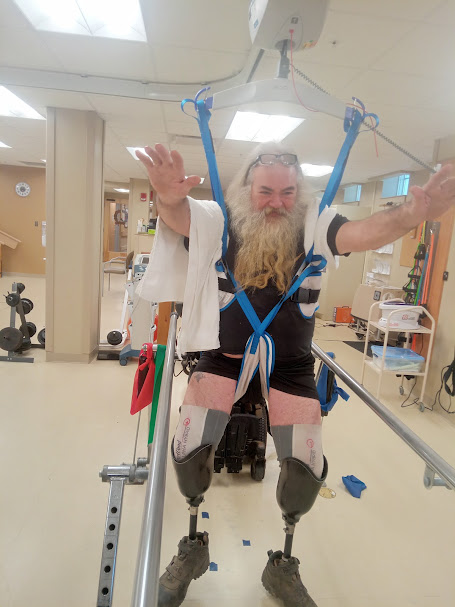
The case workers who help us remain housed and on the rigt track. On Friday, my therapist will strap me to the ceiling, lift me into a walking position, and apply electric shocks to make my residual limbs make a walking motion. There is no way I would go through things like that without my case worker and aid cheering for me. The employees make the program work.
Program Strengths and Limitations 13.
What limitations or challenges does the program face in meeting veterans’ needs?
I am again going to have to point to substance abuse. It is a very hard thing to tackle. Maybe sprinkle in some mental illness.
Improvements and Recommendations 14.
What recommendations would you make to make HUD-VASH more strengths-based in how it supports veterans? 15. If you could modify or expand the program, what changes would you suggest to better support veterans and their long-term stability?
Team with groups like AmVets & municipal senior centers to provide opportunity for social events. Maybe block parties, community yard sales, and like social events.